
The Netherlands is facing a major public health challenge. Although people are living longer on average, the number of years spent in good health is declining. Chronic lifestyle-related diseases contribute to a lower quality of life, rising healthcare costs and increased sickness absence. Factors such as unhealthy diets and insufficient physical activity play a significant role in these developments. At the same time, health inequalities between population groups continue to grow. According to figures from the Social and Economic Council of the Netherlands (SER), the gap in healthy life years between the most and least affluent people in the Netherlands has now reached 24 years.
BIO-COMPaSS, a seven-year research project funded by the Dutch Research Council (NWO) through the Dutch Research Agenda's Research Along Routes by Consortia (NWA-ORC) programme, under the Sport and Exercise route, aims to contribute to addressing this societal challenge. The project investigates whether insight into biological age can motivate people to make sustainable changes in their diet, physical activity and lifestyle.
Biological age reflects how "old" the body is in functional terms, based on measurable processes such as metabolism, inflammation, organ function and recovery. Unlike chronological age, biological age can vary significantly between individuals. Two people of the same calendar age may have very different biological ages. BIO-COMPaSS investigates how biological age can be measured reliably and how this knowledge can be used to encourage lasting lifestyle changes.
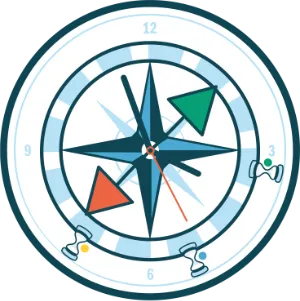
The project focuses on identifying and validating biomarkers and biological ageing clocks. Researchers investigate which biomarkers are not only valid and predictive but can also be influenced by lifestyle interventions. Behavioural determinants play an important role in this process: biological age should serve as both a motivator and a practical compass, helping individuals optimise their nutrition, physical activity and overall health.
BIO-COMPaSS takes a broad approach to health. In addition to physical factors, the project considers psychosocial aspects and explores how people can integrate healthier choices into their everyday lives.
To achieve this, BIO-COMPaSS brings together a large consortium of researchers, knowledge institutions, businesses and societal partners. The research is organised into several interconnected research lines and work packages, combining expertise from a wide range of disciplines, including movement sciences, nutrition sciences, behavioural sciences, implementation sciences, genetics, data science, biomedical technology and healthcare. This interdisciplinary collaboration aims to ensure that the knowledge generated is not only scientifically relevant but can also be translated into practical applications.
The societal ambitions of BIO-COMPaSS are substantial. The project aims to contribute to widespread lifestyle changes and inspire a national movement towards healthy ageing. One of the central ideas is that biological ageing clocks could provide short-term feedback on the effects of lifestyle interventions, helping people stay motivated to maintain healthier habits. The ambition is to reduce participants' biological age by an average of five years.
Through these efforts, BIO-COMPaSS aims to contribute to more healthy years of life, reduced health inequalities and a future in which prevention and personal health play a more central role in healthcare and society.
By making biological age visible and personally meaningful, BIO-COMPaSS seeks to bring health closer to individuals. Rather than remaining an abstract medical concept, biological age could become a tangible and motivating measure that empowers people to make sustainable choices for their health and future.